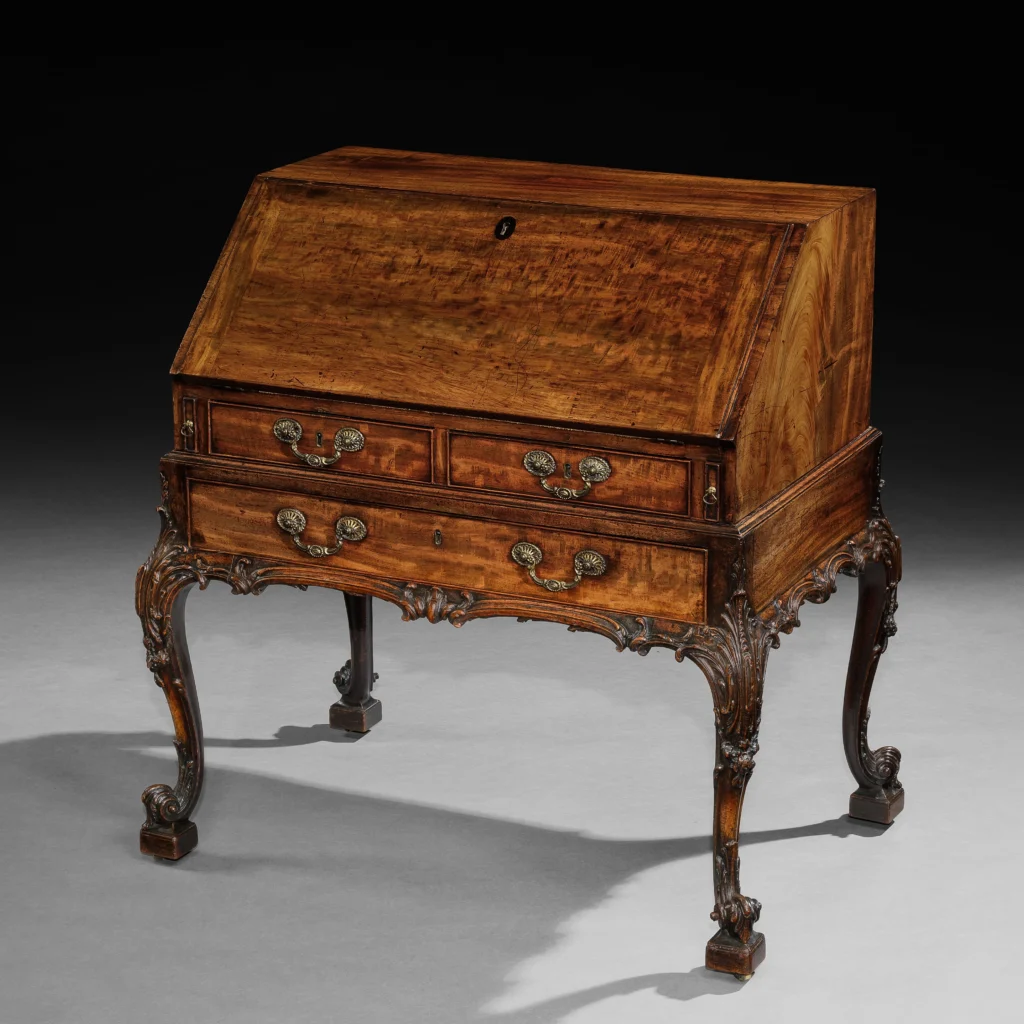
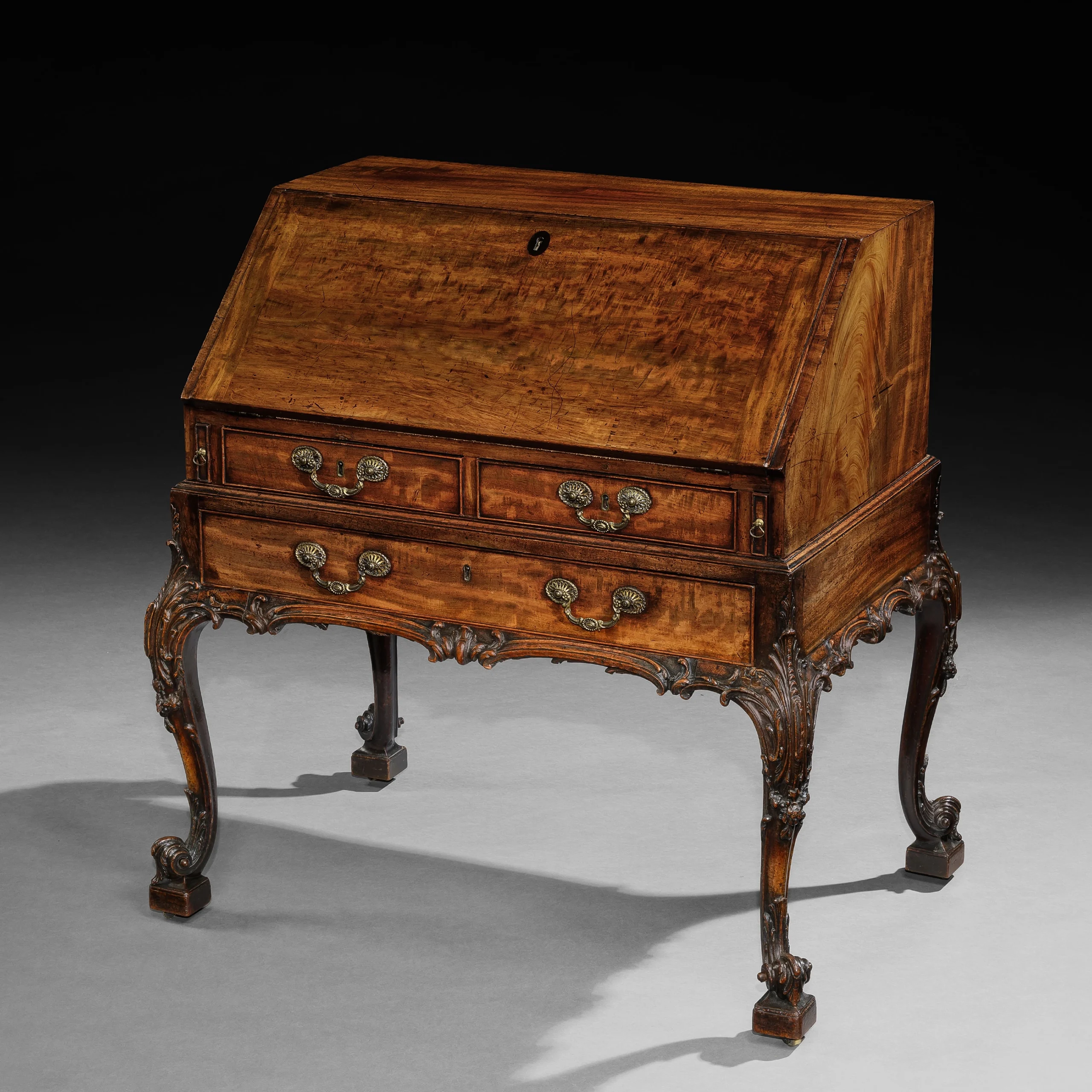
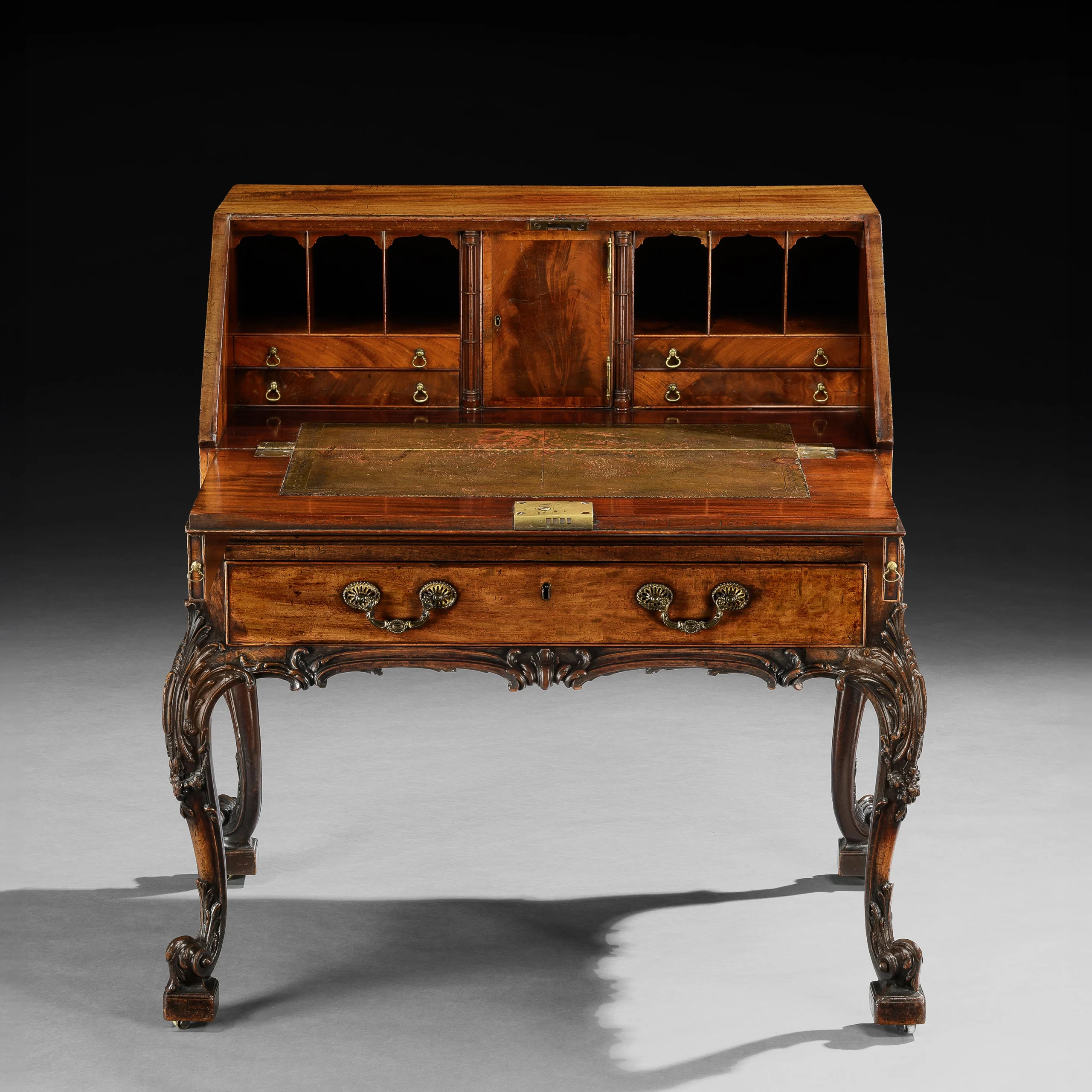
The bureau with sloped fall is veneered with finely figured fiddleback mahogany, opening to reveal an interior with central door, cross banded and veneered with flame mahogany. Flanked on either side by drawers and pigeonholes and a leather lined writing surface.
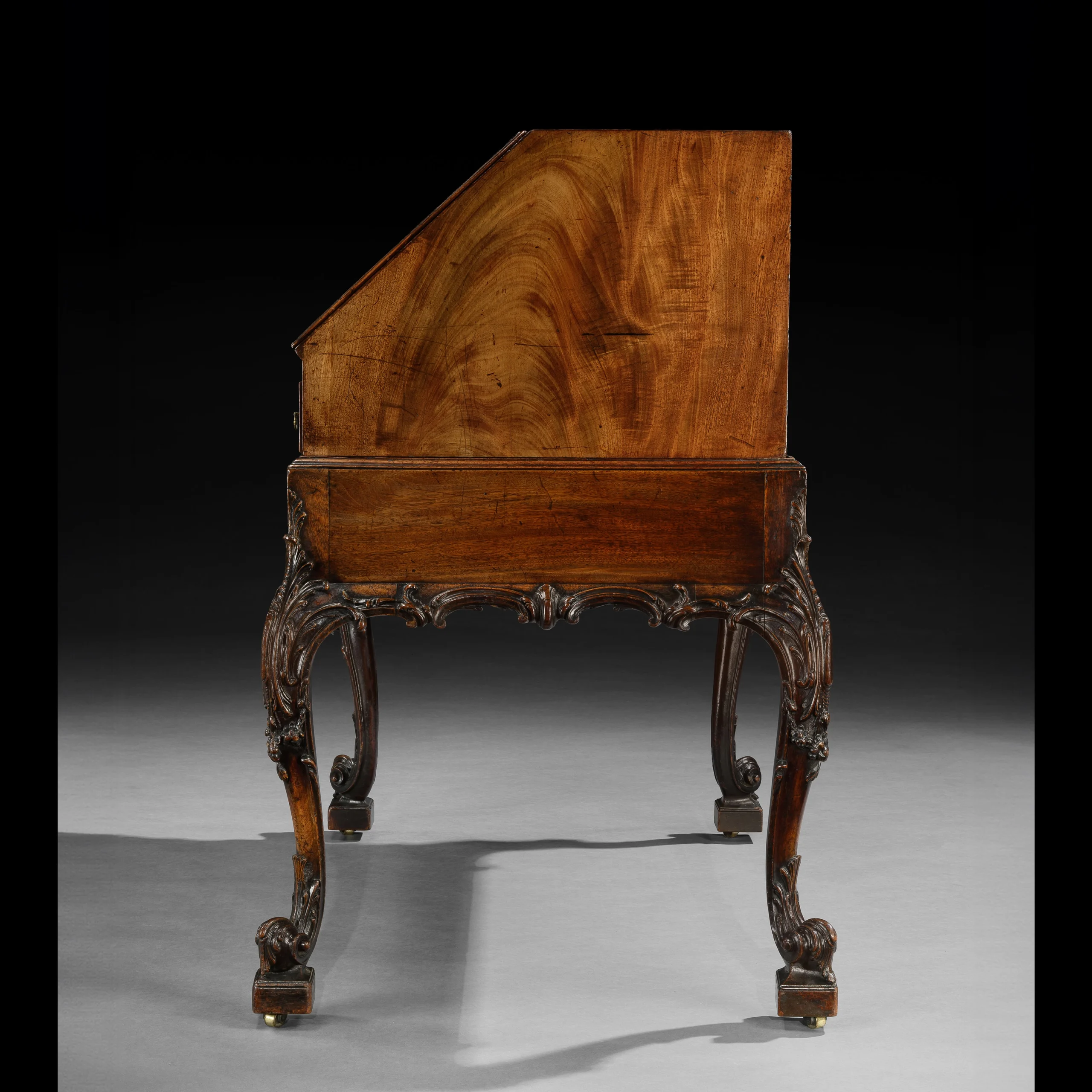
The two short and one long drawer below with finely chased gilt brass handles. The stand is elaborately carved with ‘C’ scrolls, cabochons and acanthus leaves.
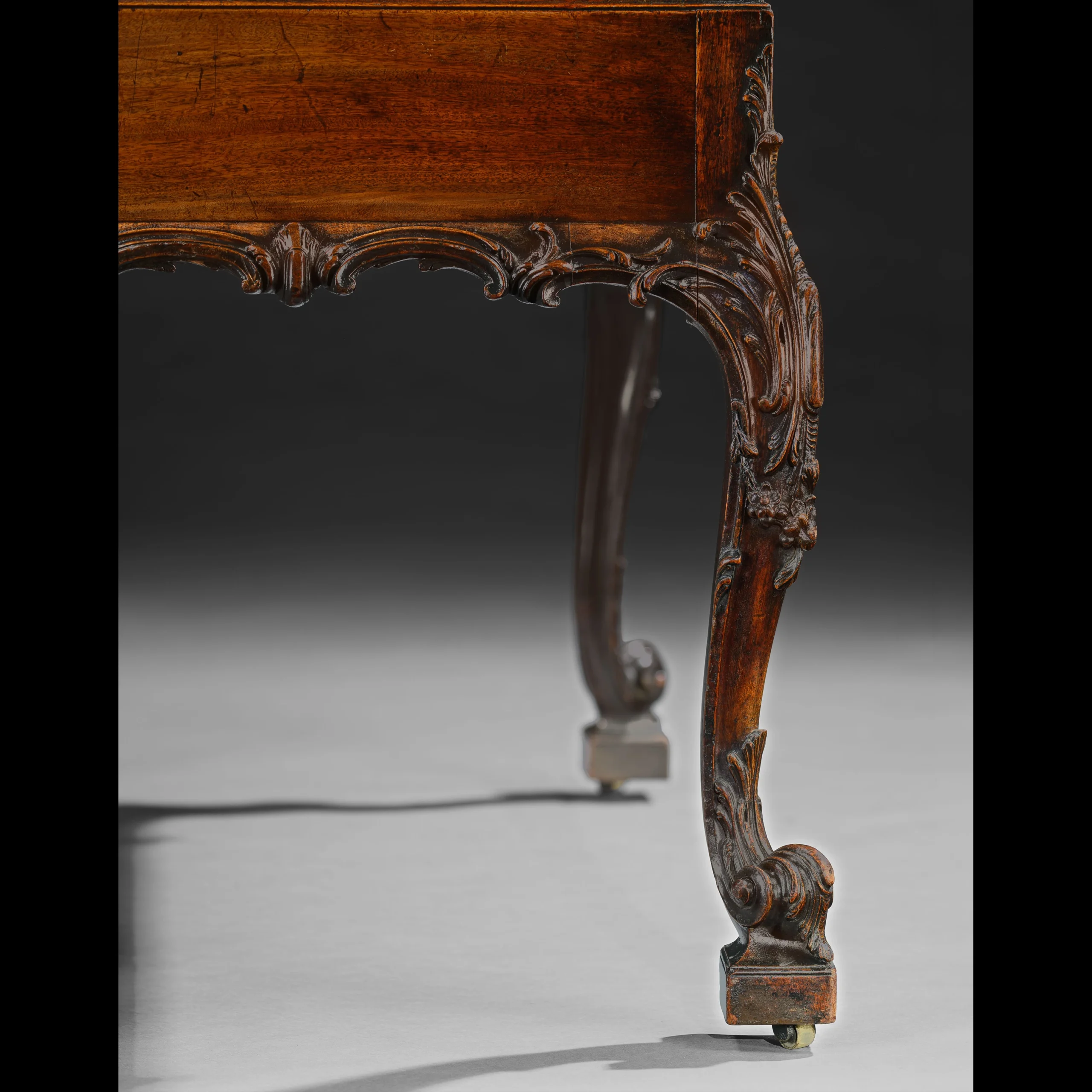
The cabriole legs are similarly carved with stylised foliage and garlands of flowers over scrolled feet adorned with acanthus and block feet with the original recessed castors. Of exceptional colour and untouched patina.
Certain characteristics of this bureau closely associate it with the work of Thomas Chippendale. In terms of design, it certainly showcases much distinctive and extremely well executed English Rococo carving of the circa 1760 period. These carved elements relate closely to specific stylistic aspects featuring among the contemporaneous drawings that appear in the three editions of Chippendale’s seminal work, “The Gentleman and Cabinet-Maker’s Director”, published between 1754 and 1762. In particular, a drawing for a desk and bookcase No CXI in 1760 which shows a bureau with a similarly carved stand.
With regards to construction, the above piece employs chamfered drawer stops and short grain drawer kickers, both of which allow for the smooth opening of its drawers, and at the same time these have clearly minimised wear of the internal components. This construction also ensures that the drawers do not drop down much, if at all, during the drawer-opening process. Such attributes are often found on carcass furniture produced in the Chippendale workshop, particularly in the early 1760’s.
Provenance
Purchased from Mallett and Sons Ltd
Private Collection
Thence by descent